TetraSub: Industrial-scale floating wind
A 15+ MW floating foundation engineered for commercial-scale deployment.
Built for deep-water deployment
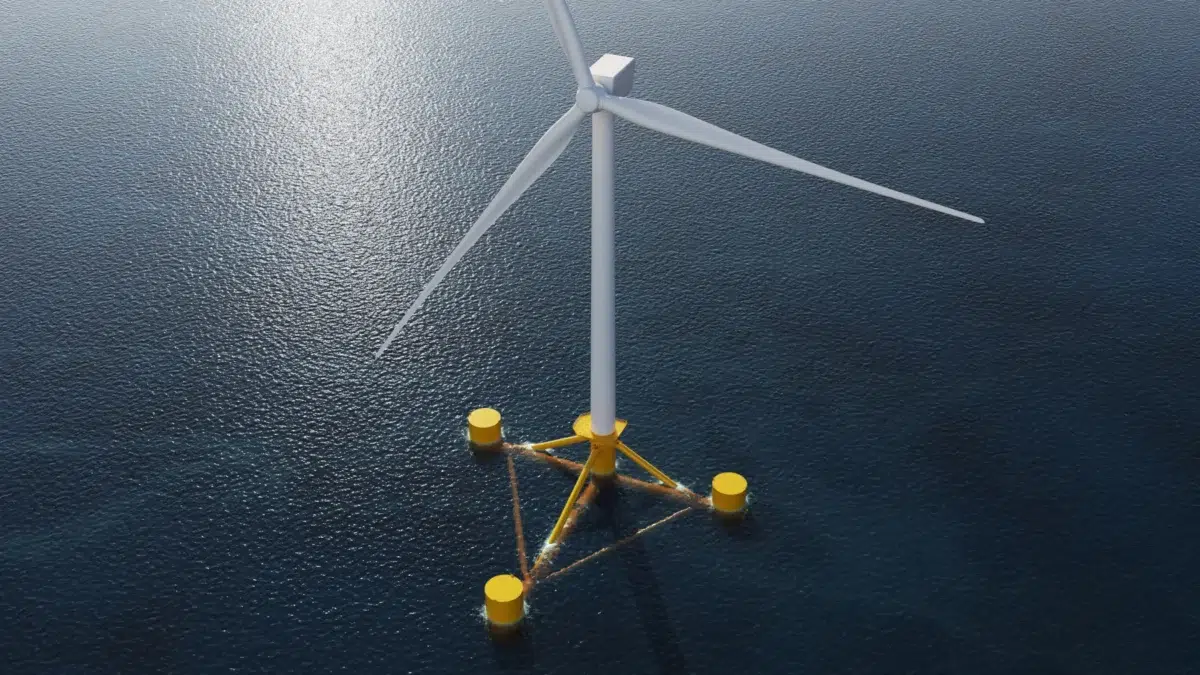
The renewable transition is moving into deeper waters. The TetraSub is a 15+ MW floating foundation suited for water depths from 50 m and up, engineered for large-scale deployment using global supply chains.
Using standard tubular steel components and avoiding highly specialized port facilities, TetraSub enables faster project delivery and competitive cost levels.
A product, not a concept
The 15+ MW TetraSub foundation is in production.
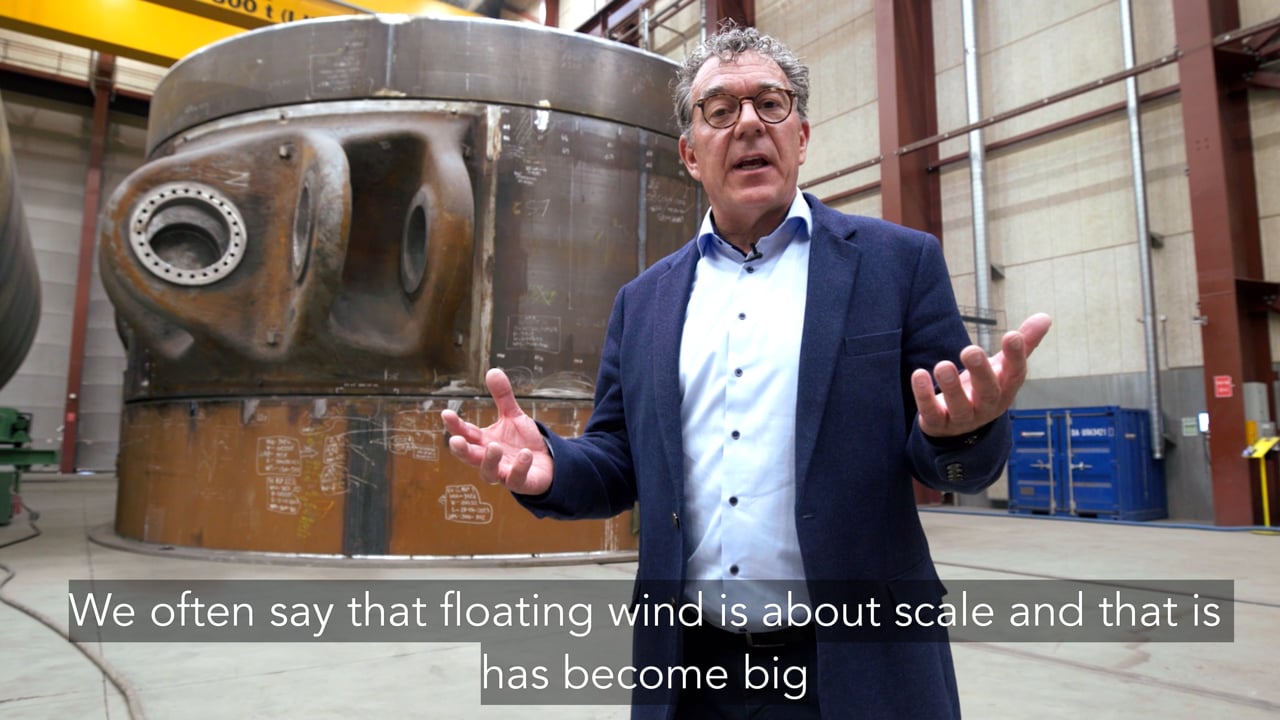
Join CCO Michael Hannibal at the production lines where the TetraSub 15+ MW is currently being manufactured.
Our 5×1 strategy
Our 5×1 strategy focuses on commercial execution.
1 Million Euro per MW
Based on binding supplier offers and proven industrial methods, the current cost estimate for the foundation is 1 million Euro per MW. The cost is for a floating foundation launched in the water, ready for turbine installation.
1 Week
TetraSub can reach a production rate of one complete floater per week per assembly line, subject to project setup and supply. The modular design enables rapid fabrication using standard equipment, and a multi stand assembly setup supports reliable, weather resilient production.
1 Season
With continuous float out and parallel installation operations, full gigawatt scale projects can be deployed within a single installation season.
1 Port
TetraSub can be assembled in existing ports using local contractors, with no need for large quay side welding crews. Each assembly stand requires only 20,000 m² and can be used in shallow draft ports with no more than 10 metres water depth.
1 GW
Standard tubular steel and existing tower production lines enable the deployment of 500 MW to 1 GW projects from a single location, where site and infrastructure conditions allow.
Fast weld-free assembly
Stiesdal Offshore’s pin‑connection system replaces complex quay‑side welding. Components lock together mechanically, enabling fast assembly with standard cranes.
Full‑size 15+ MW assembly tests show 4 minutes per pin insertion. And during the 2020 assembly of the 3.6 MW TetraSpar Demo, operational off the coast of Norway since 2021, the fastest assembly of a complete brace, from ground position to fully locked installation, was 32 minutes.

Passive ballast and minimal structural maintenance
The TetraSub floating foundation targets low OPEX. A fully passive ballast system eliminates failure‑prone components such as pumps and valves, and the absence of moving parts in the foundation reduces offshore maintenance needs on the structure itself.
Shared anchors – lower station keeping costs
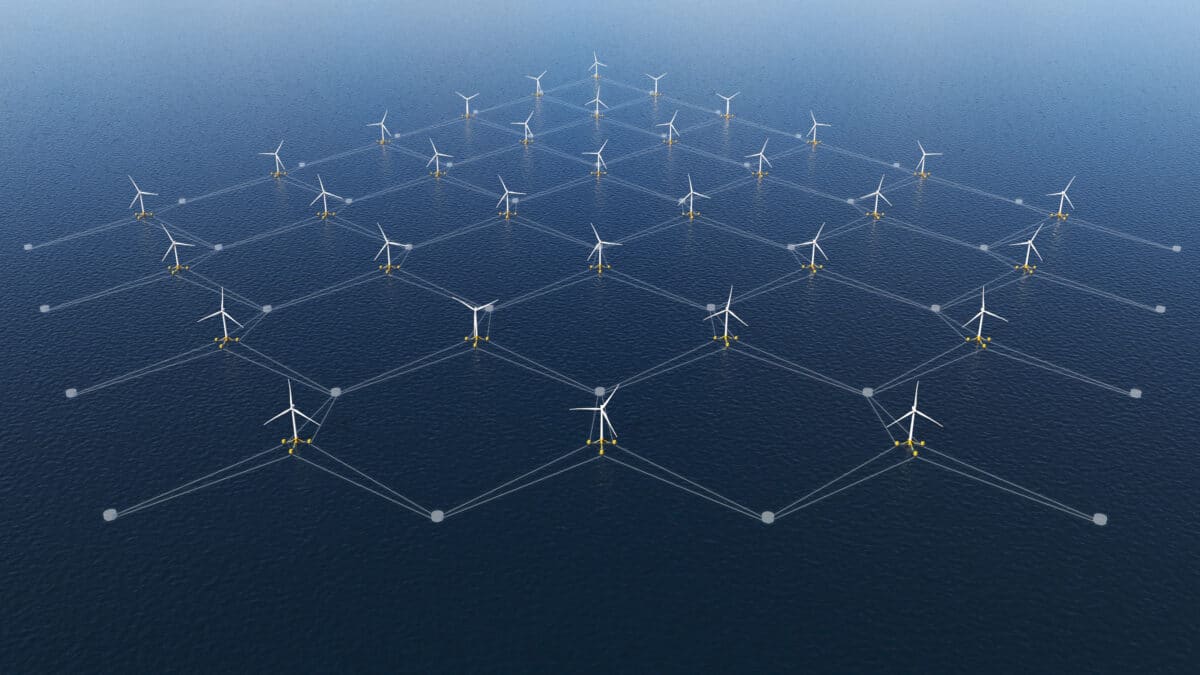
Stiesdal Offshore offers the TetraMoor system, a shared-anchor, twin-line arrangement. The TetraMoor system allows multiple units to share anchor points and can reduce the total anchor count by more than 50% compared with individually anchored concepts. The twin-line arrangement favours the use of standard chain and line sizes and reduces mooring loads significantly.
The TetraMoor system can reduce overall mooring and anchoring costs by 30% or more compared to traditional mooring arrangements, depending on site conditions and project design.
OEM interfaces
Interfaces are pre‑validated with leading turbine OEMs in Western and APAC markets to reduce integration risk and support project bankability.
We have proactively validated key interfaces with leading turbine OEMs in both Western and APAC markets, intended to reduce integration risk and support project bankability.
Proven experience
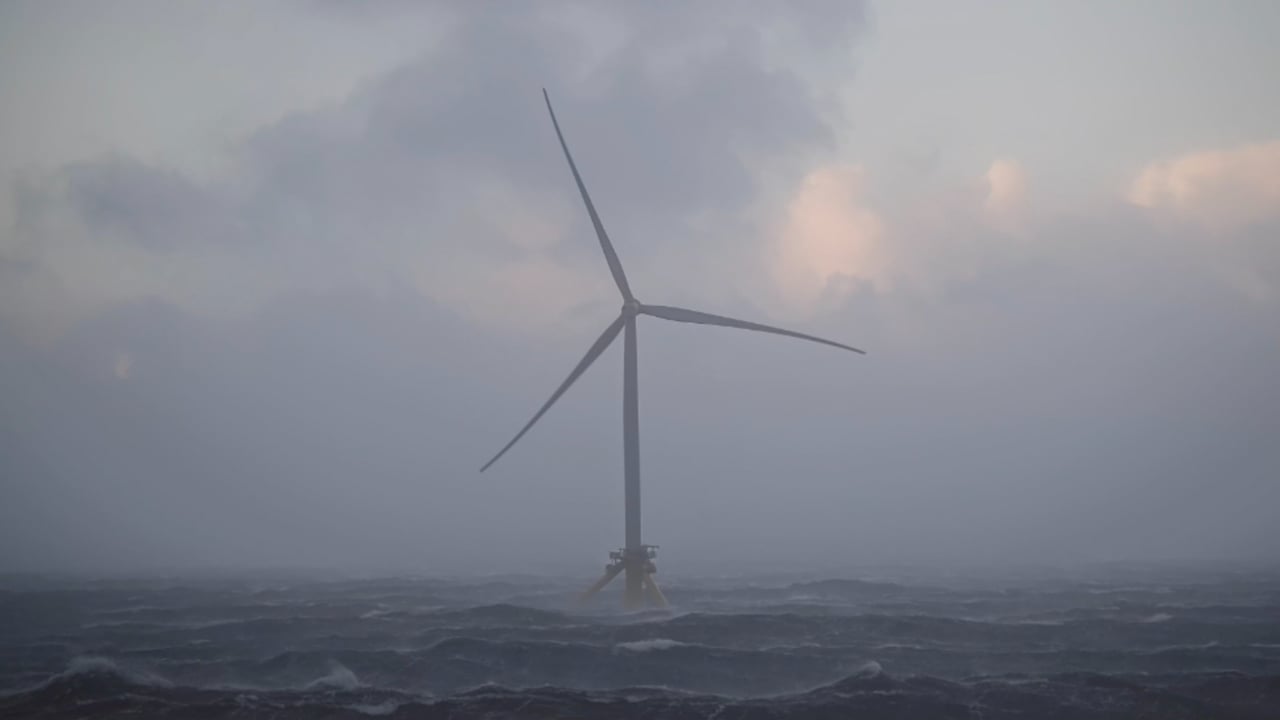
The TetraSpar Demonstrator has operated off the coast of Norway since 2021 in partnership with RWE, TEPCO, and Shell, validating the industrialised approach in full‑scale offshore conditions.
Watch the short video to see a summary of performance data.
Frequently Asked Questions
What is Stiesdal Offshore’s role in the floating wind market?
Stiesdal Offshore is a technology provider and technical partner, not a wind farm developer or steel fabricator.
We license the TetraSub foundation design and provide engineering support for manufacturing, port layout and FEED/Pre‑FEED analysis, helping establish the technical framework required for gigawatt‑scale floating wind deployment.
What is the core industrial philosophy behind the Stiesdal concept?
Our design is rooted in the proven logic of the wind turbine itself. We assemble the floating offshore structure from factory-made steel components that can be transported to the port of embarkation.
Our assembly method differs from the assembly method of the wind turbine itself, however. We use a maintenance-free pin joint instead of the bolted connections of the wind turbine. The rationale for this is that it is very hard to avoid maintenance of subsea bolts, and that such maintenance is generally not easy and not without risks.
This approach allows us to leverage existing global supply chains and conduct assembly at standard draft ports, ensuring that production capacity can scale to meet gigawatt demand.
Is Stiesdal Offshore’s technology commercially ready?
Yes. We have moved beyond the proof-of-concept phase to the product phase. Our technology has been validated by the operational TetraSpar Demonstrator (commissioned 2021) and is currently in production for the Floating Frontrunnerproject.
We are actively engaged in commercial projects, including the Pentland Floating Wind Farm, and have pre-validated our interfaces with major global turbine OEMs.
What is the relationship between Stiesdal Offshore and Henrik Stiesdal?
Stiesdal Offshore is the floating wind arm of Stiesdal A/S, founded by wind industry pioneer Henrik Stiesdal. The company is built on his philosophy of “simplicity, standardisation, industrialisation,” applying the same industrial logic to floating wind that enabled the scaling of bottom-fixed offshore wind from the 1990s.

Ready to scale?
Please reach out to Oliver Terman Pedersen, Sales Manager, if you have unanswered questions or want to discuss your floating wind project.